Sailing

Sailing: the fine art of getting wet and becoming ill while slowly going nowhere at great expense.

Monday, 20 August 2018

Crossing the Arctic Circle


The third day of our voyage was the big day for crossing the Arctic Circle.  We were up early as we were due to cross the magic latitude line of 6633’N between 7 and 8 am.  The ship had a contest on to guess the exact time of the crossing.  The previous night Bob and I spent hours calculating the nautical miles from the last port of call by all the possible routes through the many little islands and how long it might take going at the cruising speed of 14 knots, etc.  It was all good fun but in the end we just made a guess.  It was a misty, gray morning as we passed the silver globe on Vikingen Island; a perfect mood setting.
The silver globe on Vikingen Island
Taking a selfie to commemorate the occasion
Later that morning King Neptune came for the traditional Arctic Circle ceremony.  Hardy souls volunteered (not us) to have Neptune pour ice cubes down their backs then take a shot of Aquavit to warm up the insides. All in good fun.
Getting the ice treatment from King Neptune with our Captain (right) looking on
Warming up with Aquavit
After the excitement of the Arctic Circle milestone we settled in for more gazing at the beautiful scenery.
Beautiful lighthouse


Mid-afternoon we arrived at Bodø were the Norwegian Aviation Museum is located.  We had a 2 hour stop over here so caught a bus for a quick look at the planes.  Bob was thrilled.
Mosquito
Spitfire
Sabre
In the early evening we made short stops at the pretty towns of Stamsund and Svolvær in the beautiful Lofoten Archipelago.  On the dock at Stamsund we witnessed a touching reunion of recent African and Syrian migrants.  One doesn’t expect to see recent migrants in a small (population 1000) remote town above the Arctic Circle.  I thought what a huge adjustment it must be for them.
Happy reunion
Svolvær was in the middle of a music festival and the town was abuzz.
Party night
Misty waterfront in the twilight
The red-letter day ended around 11pm when we entered the magnificent Trollfjord.  It was still twilight and rain and mist gave the whole area an ethereal atmosphere.  The fjord is 2km long, the entrance just 100m wide and 1000m cliffs surrounded us.   Stunning!
 
 
Bob looking Nordic
The narrow entrance
The next day we spent several hours in the largest Norwegian town above the Arctic Circle, Tromsø.  We walked around the town taking in the sights. 
Snow fields in the mountains

Scenery on our way to Tromsø
Approaching Tromsø
Lovely old movie theatre now a pub where a cold beer will set you back €10!
The Migu Run Skyrunner World series was taking place while we were there.  This is a 50km run with a 4,400m vertical climb over incredibly rough terrain.  The winners finish the race in 7 to 8 hours.  We were there around 10 hours after the start of the race and watched some of the muddy and battered participants finishing.  These men and women are fit!

One thing that has struck us generally about Norwegians is their incredible level of fitness.  One rarely sees anyone overweight or obese.  Everyone exudes a rosy healthiness.  Norwegians have a very outdoors lifestyle.  There are TV channels which telecast hours of people walking over the moors and mountains and we watched Norwegians riveted to this (for us) stupefyingly boring programming.  
Finish line
Celebrating fitness
We finished our short visit to Tromsø at the Polar Museum.  This museum showed the life of trappers and hunters (quite brutal by today’s standards) and had a good exhibit on Polar explorers.
Trapper lodge
Sled dogs
  

Thursday, 16 August 2018

Hurtigruten Cruise – Simply Fabulous


Back in May we had met another CA couple in the lovely little bay of Lakka on the island of Paxoi. (https://shamballacyc.blogspot.com/2018/05/pottering-around-ionian.html)  It proved to be one of those serendipitous meetings that seem to happen frequently with this cruising life.  Over dinner they told us about the Hurtigruten Cruise they took during the winter to the far North of Norway, above the Arctic Circle, to see the northern lights.  We were quite intrigued by their stories so we did some research on this Hurtigruten caper.  As we were planning to go to Scandinavia during our summer land travels, we thought this sounded like a perfect addition to our plans and booked the 12 day trip from Bergen to Kirkenes, return.  What a great decision it proved to be!
On our way - leaving Bergen at 8pm


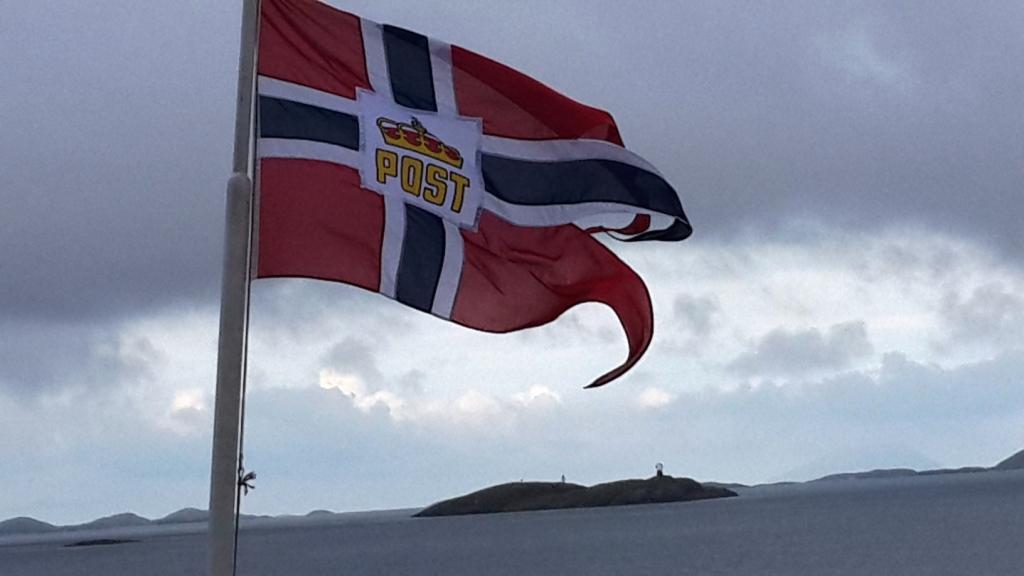
Hurtigruten (meaning ‘fast route’) was started 125 years ago in 1893, the same year Nansen started his voyage to the North Pole in the Fram.  The company provided mail, cargo and passenger service along the rugged west coast of Norway.  The service changed mail delivery times from 3 weeks in the summer and 5 months in the winter to just 7 days.  With the construction of local airports in the 1980’s the role of Hurtigruten changed to have more of an emphasis on tourism, although it still delivers cargo to 34 ports north and south bound along the West Coast of Norway.

Our route
We are not particularly interested in big luxury cruises (nor can our budget afford them) so we chose the ‘classic’ cruise on the old ‘grand lady’, MS Lofoten.  This ship was built in 1964 and the facilities are basic – small cabins and just a few lounges.  But Mother Nature and the fabulous chefs and staff on board made the cruise a pure luxury. 
MS Lofoten and her bigger sister
The hardest part about writing this blog entry is trying to choose the best photos from the nearly 900 that I took over the 12 days.  Every day brought new amazing vistas of gorges, waterfalls, steep cliffs, craggy islands and quaint colourful villages.  We saw dolphins, puffins and sea eagles.  We stopped at small villages and large towns and cities and spent 6 days above the Arctic Circle.  We met lovely fellow passengers from all over the world, many of whom had travelled to other amazing Arctic destinations.  It was, in sort, simply fabulous.

On our first full day onboard we sailed into the Geirangerfjord.  The scenery was stunning.  We passed magnificent waterfalls tumbling over near vertical mountainsides.
The entrance to the Fjord


The next day we had a few hours in the city of Trondheim where we walked around the town checking out the sights.  The town was abuzz in preparation for what we could gather was a combination of festivals, the Bryggeri food festival and a musical festival for St Olaf.

The colourful converted warehouse apartments along the canal
19th Century drawbridge
Stiftsgarden
Nidaros Cathedral
Wreath on St Olaf
Music stage all set up for the festivities
Some of the musicians getting ready
That night we were treated to an 11 pm ‘midnight sun’ sunset.  Perfect.
 

Saturday, 11 August 2018

Heat Waves, Viking Ships, Polar Explorers and Sculpture


Viking Ship

All of northern Europe was in the middle of a heat wave while we were there in July.  Buildings here are built for the cold weather and do not cope with hot weat at all.  The heat stays in the buildings and few building have air conditioning.  Temperatures in the mid to high 20's, which are fairly mild by Australian standards, feel very hot here.  Copenhagen had 50 days with little or no rain and the grass in the parks was crisp and brown – more like Australia in the summer. 

We left Oslo planning to have a relaxing long train trip through the Scandinavian country side with a single transfer in Gutenberg.  This was not to be.  Our train was 30 minutes late getting out of Copenhagen and when we got to Malo, Sweden just across the long bridge outside Copenhagen, we were told the train terminated there.  We were to get another train in 30 minutes to Helsingborg then change for a bus to Angelholm then catch another train to Gutenberg.  The heat had buckled the train tracts in the section after Helsingborg.  

So three hours after we left we were in Helsingborg, the town we looked at from Elsinore castle (Helsingør) in Denmark the day before, a destination we could have reached with a half hour bus trip and a 20 minute ferry ride.  As expected it was chaos in Helsingborg.  Fortunately a nice Swedish lady was also going to Gutenberg and took us under her wing, translating for us and getting us on a local bus to Angelholm rather than the overcrowded and delayed buses the train company were providing in this unplanned emergency.  (The amazing thing about everyone here and in Denmark is that as soon as they realise you don't speak Danish or Swedish they immediately switch to flawless unaccented English.  I am so envious of the language skills here!)  

Needless to say when we got to Gutenberg 2 ½ hours late we had missed our connection.  Fortunately the conductor on the train arranged for a gratis night stay in the very nice hotel at the train station.  We had a restful night and continued to Oslo the next day.

So our three days in Oslo turned into two and were filled with boats and sculpture.  Our first stop was the Viking Ship Museum.  The museum houses two large Viking ships from around 900 AD which were recovered from a burial site as well as lots of artefacts from the Viking age.
Oseberg Ship
Studded wood ornamentation
We then walked to the nearby Fram Museum.  This museum honours Norwegian polar explorers and includes Fridtjof Nansen’s ship Fram and Roald Amundsen’s ship Gjøa.  The Fram was built to Nansen’s specification for his expedition to the North Pole in the 1890’s.  The Gjøa was the first ship to sail through the Northwest Passage. It was only 21m long and had a crew of 6 very brave men. 

The tales of these polar explorations are inspiring.  I am so impressed that I have started reading Nansen's book Farthest North about his expedition to the North Pole. These guys were really tough!  They provisioned the ship to be totally self-sufficient for 5 years in the world's harshest environment.  There was no radio communication back then.  When they went over the horizon into the Arctic Sea: that was it.  They were on their own.  It makes crossing the Atlantic over a few weeks using gentle trade winds look pretty tame - yet I doubt we will be brave enough to do even that.
Polar Explorers
The Gjøa
Arctic sled
The Fram
The very sturdy construction of the Fram
The Fram sail plan.  It also had a petrol engine
Quarters for the crew
On our last day in Oslo we went to Vigeland Sculpture Park just northwest of the city centre.  This is an amazing and beautiful park devoted to Gustav Vigeland's lifework with more than 200 sculptures in bronze, granite and wrought iron.
The Sculptor


For you, Eva


After the sculpture park we walked around Oslo.  I vainly tried to find places that I recognised from my visit 14 years ago but the city has changed too much (and my memory is too poor).  Finally we watched the sun set over Oslo from the top of the new opera house.  So we said goodbye to Oslo and boarded our overnight train to Bergen.
Oslo Harbour
Sunset over Oslo